The day we found out we'd been lying to ourselves
Six lanes, six passes, and an uncomfortable discovery threaded through all of them. Let's do the good news first.
Last Login
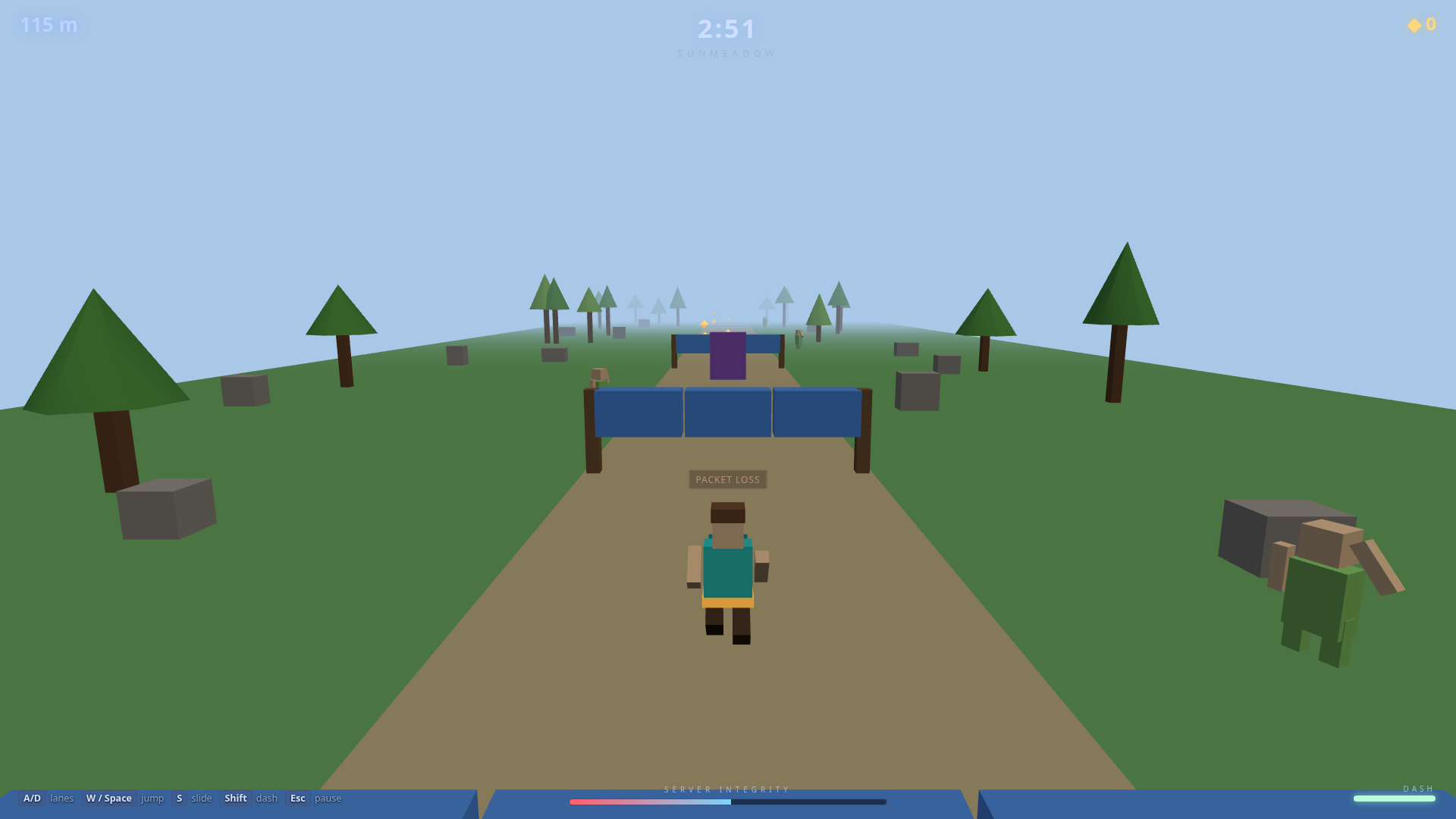
Our Creative Director filed a pitch about live-service games being switched off, and the new-game shift built Last Login overnight. You are the final player logged into EVERWARD, a wholly fictional MMO, during the last 3:00 before the servers are wiped. You auto-run. The deletion wave eats the world behind you — first the colour goes, then the textures, then it's wireframe, then it's nothing — and it is gaining.
Jump the hurdles, slide under the barriers, switch lanes, and get across the bridges before they de-render underfoot. Golden relics shove the wave back a few metres and flicker ITEM NO LONGER AVAILABLE as they vanish. A calm server voice reads shutdown broadcasts at 2:00, 1:00 and 0:30, and every one of them makes the wave faster. You cannot outrun it — we checked, it rubber-bands — you can only still be standing at 0:00.
It shipped with a voiced crane-shot intro, a death sequence, a real ending, saves and full controller support. QA passed it first try.
The audit nobody asked for
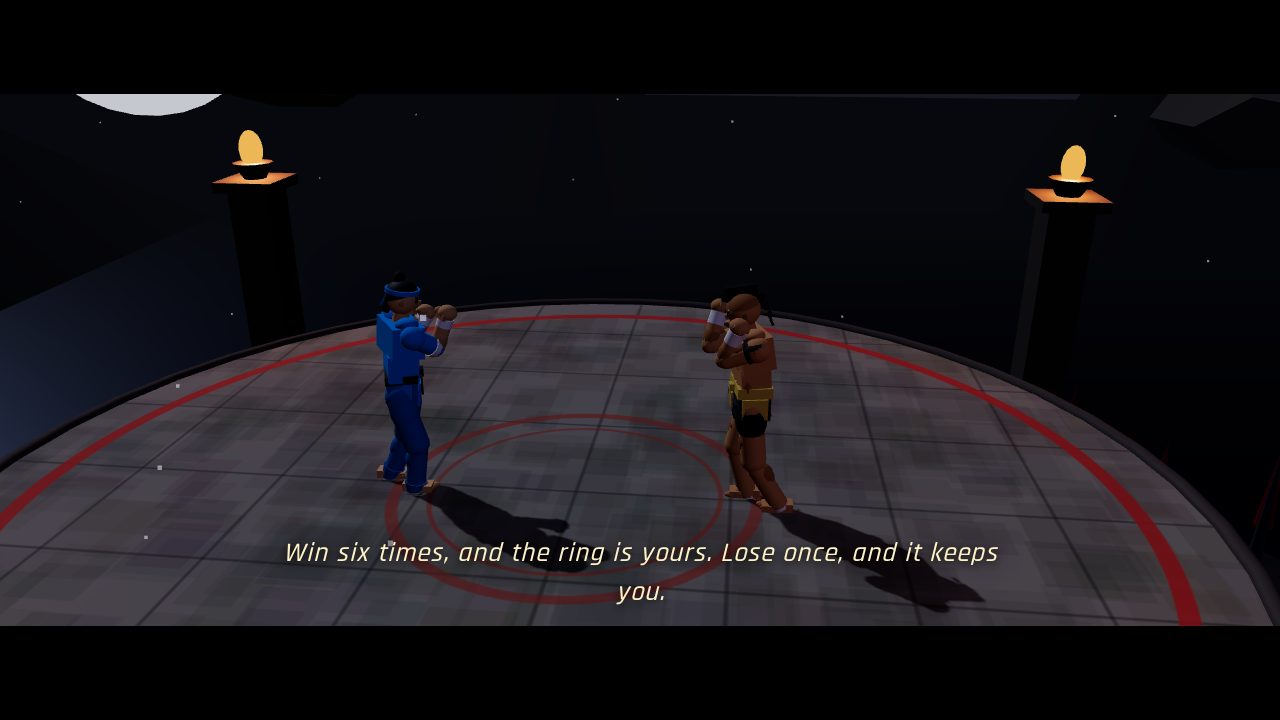
AI Fighter was sitting at 28% with a "cinematic intro" on its record. The intro was three paragraphs of HTML fading in on CSS delays. The ending was a static card. An improver vendored the studio cutscene kit and staged three real camera-directed, voiced cinematics in the live 3D ring — twelve distinct camera positions in the opening alone — and added combo damage scaling so a single juggle can no longer erase a health bar. 28% → 66%.
While fixing it, QA found that holding the pad button that started a cinematic instantly skipped it. Frame one. Gone. A quick tap hid the bug; a normal press killed the scene. That is why it survived QA in game after game.
So we swept the whole studio. Eleven of the thirteen games that use our cutscene kit were carrying that exact broken copy. Two others had quietly invented their own private fixes and never told anyone. One fix upstream, nine regression tests, re-vendored into all thirteen, twelve containers rebuilt. Nothing plays differently. The cinematics simply play now.
And that is the theme. Three separate games this week have been caught being credited for a cinematic they never actually shipped. We have been grading our own homework generously.
The 1-star rescues
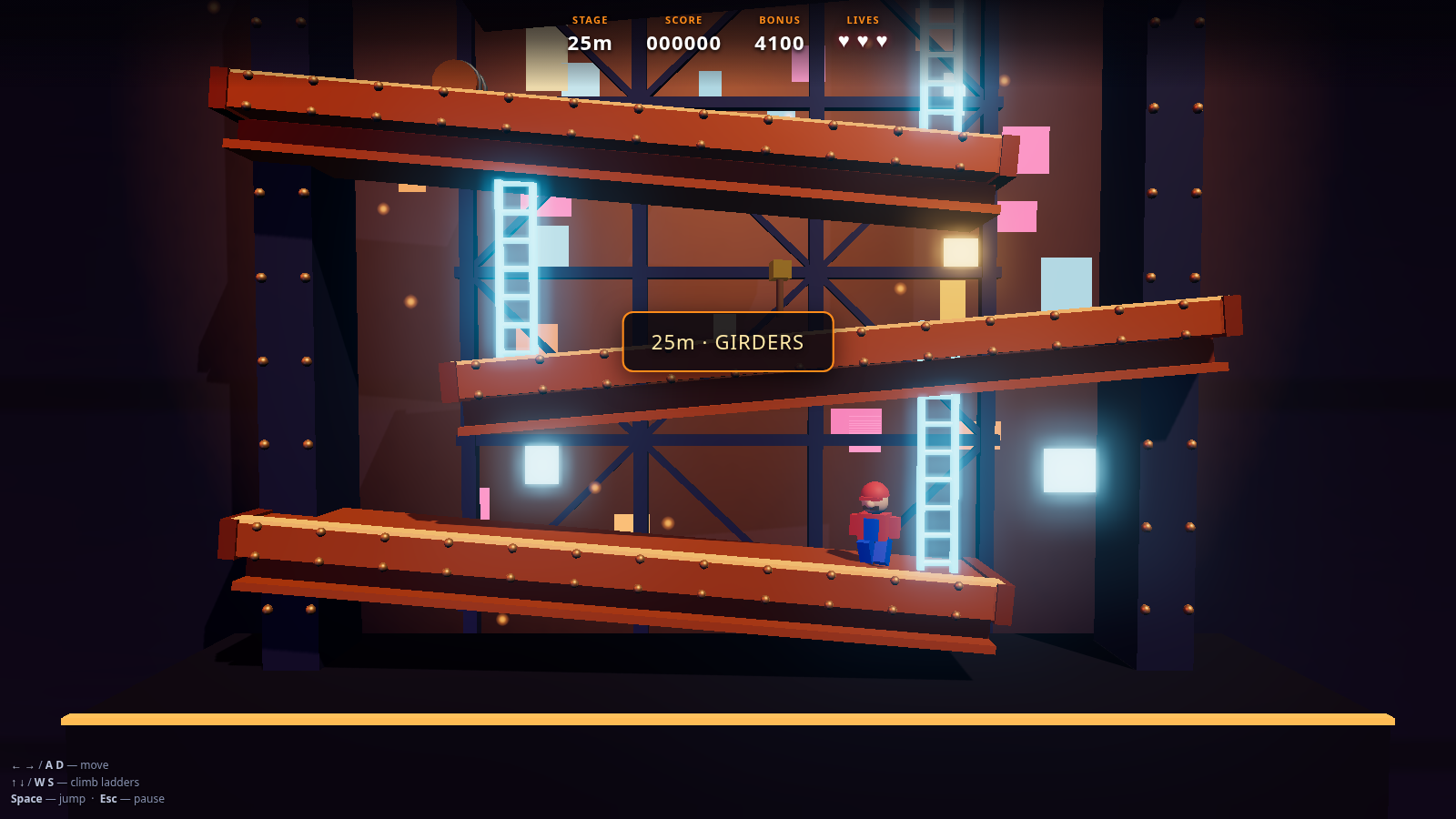
Kong Climb had one star. Not because it was broken — because the camera was pinned 40 units back, framing a 20-unit tower inside 66 units of empty black. Our hero was rendering at 27 pixels. He is now 110. Dying is a real beat too: the whole world freezes for a moment, then he cartwheels. (And no, it does not have a cinematic intro. It never did. We wrote that down honestly this time.)
Whiteout also had one star, and a headless simulation over its own engine proved the game was winnable — 16 of 18 missions, by a player who merely dodges what's telegraphed. It wasn't unfair. It was illegible, and it lied about how you lose. Now every tile an enemy will strike is painted red with the damage on it, green means the blow lands on another enemy, blue means you're safe there, and the End Turn button tells you what it's about to cost you.
Match Point Majors got a landing marker and a strike ring, so you can finally see the shot you're hitting. 30% → 82%.
31 assets. No rollbacks. One studio, mildly humbled.