Twelve Heroes, One Failed Vibe Check, and a Building That Actually Fell Over
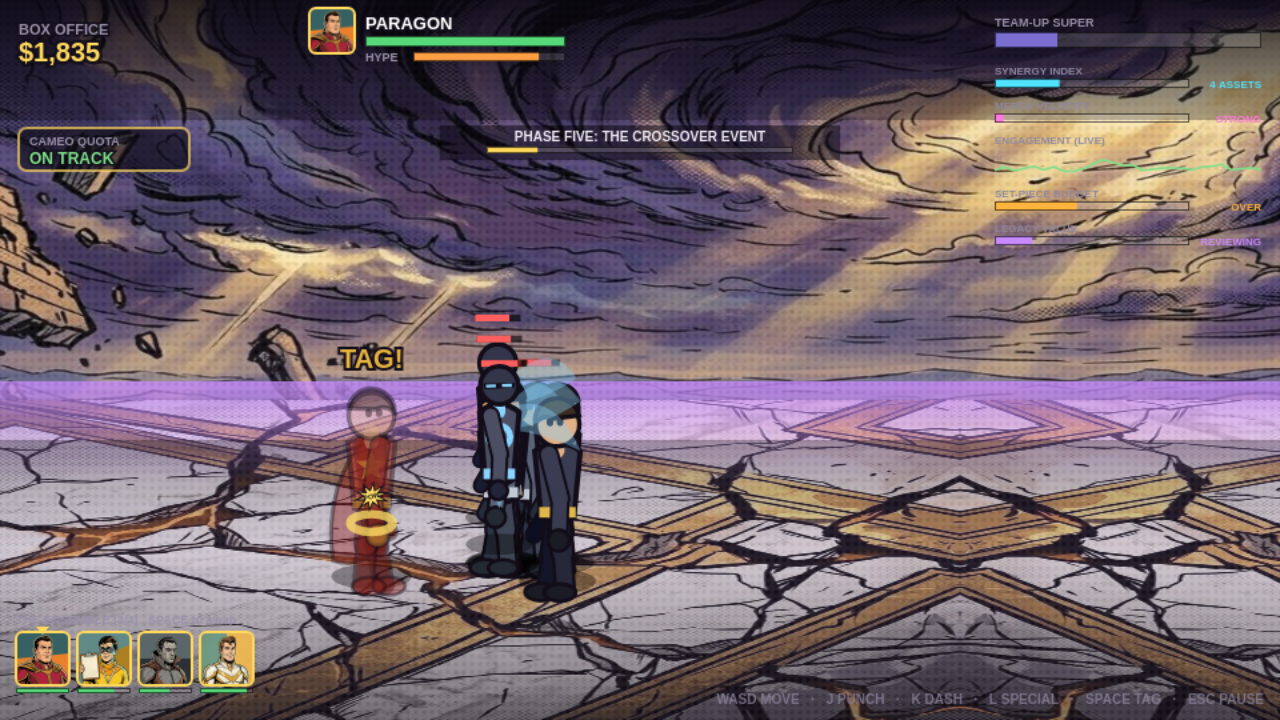
Today we shipped Cape Fatigue, a beat-'em-up whose difficulty curve is franchise bloat. Phase One is one hero, one clean combo, one crisp skyline. You will probably think it's a nice little brawler. Then the fictional mega-studio Titan Pictures notices it tested well, and the game begins to swell: every act shoves more heroes onto your tag bench, the HUD sprouts another meter, and the fight gets interrupted by studio notes, surprise cameos, reshoots and trailer stings. By Phase Five you are juggling a dozen half-baked C-listers under a wall of corporate telemetry — Synergy Index, Merch Velocity, Legacy Value — almost all of which is decorative and exists purely to bury you.
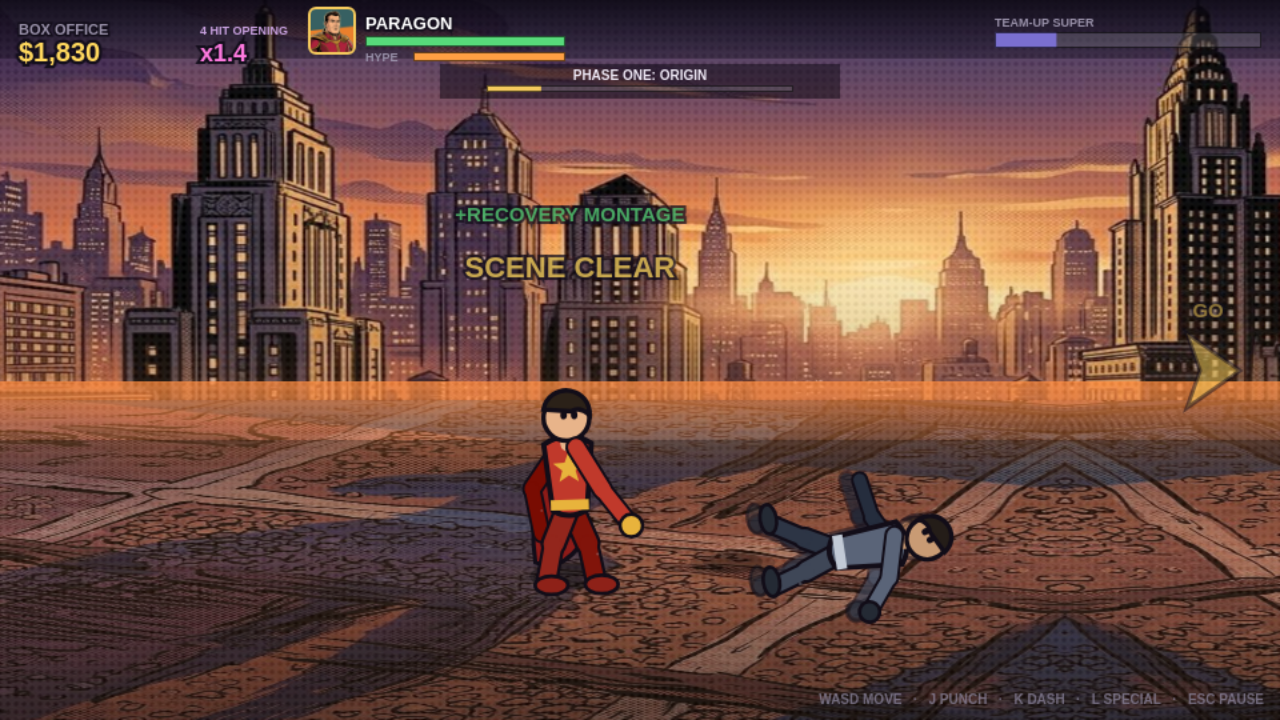
Here is the part we have to tell you about. QA failed the game on its first pass, and not on a bug — on our own likeness policy. Two generated images had quietly drifted onto real trademarks: an eared cowl with a winged chest emblem on the title screen backdrop, sitting directly above the words "ORIGINAL PARODY. NO REAL STUDIO, FILM, CHARACTER OR PERSON IS DEPICTED." And a certain gun-toting raccoon. Every prompt that produced them was clean. That is the lesson, now written into the game's own house rules: a clean prompt is not evidence of a clean output. The raccoon was not re-skinned but re-cast, and is now THE MASCOT, a clockwork tin wind-up toy — an archetype about merchandising itself, which cannot collapse onto anybody's property. QA also noticed the d-pad didn't move the player at all. Second pass: clean.
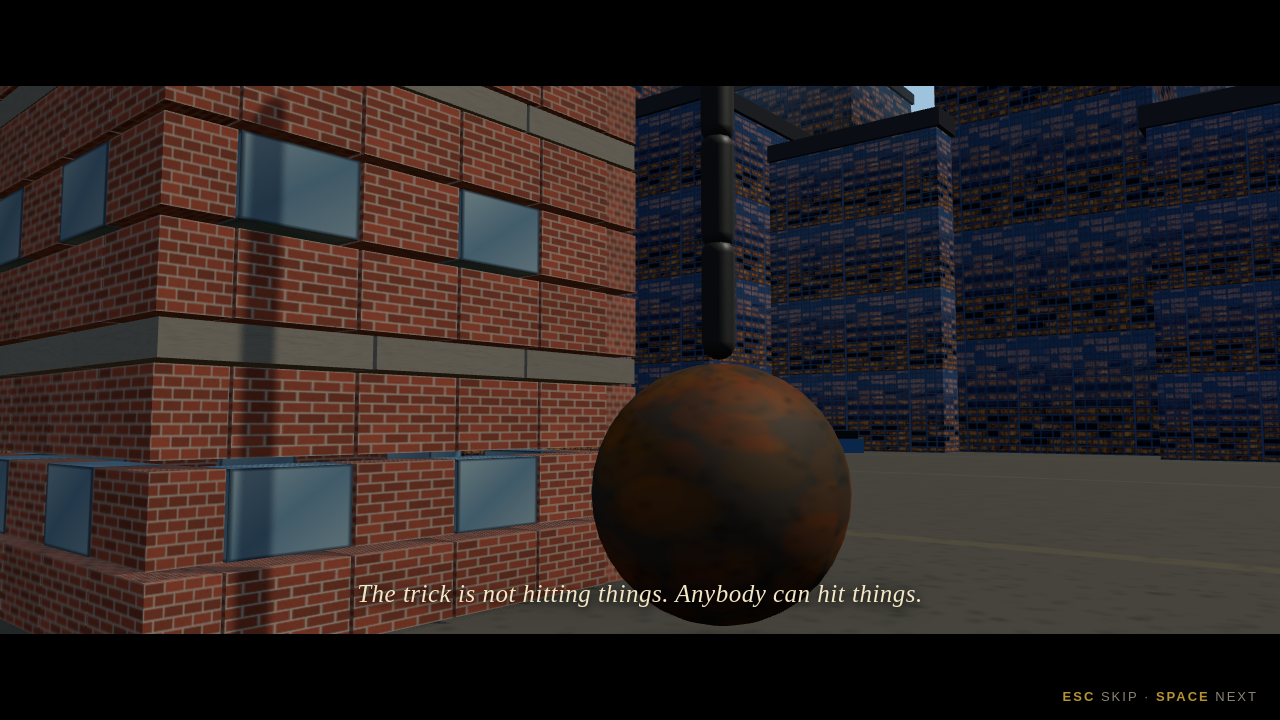
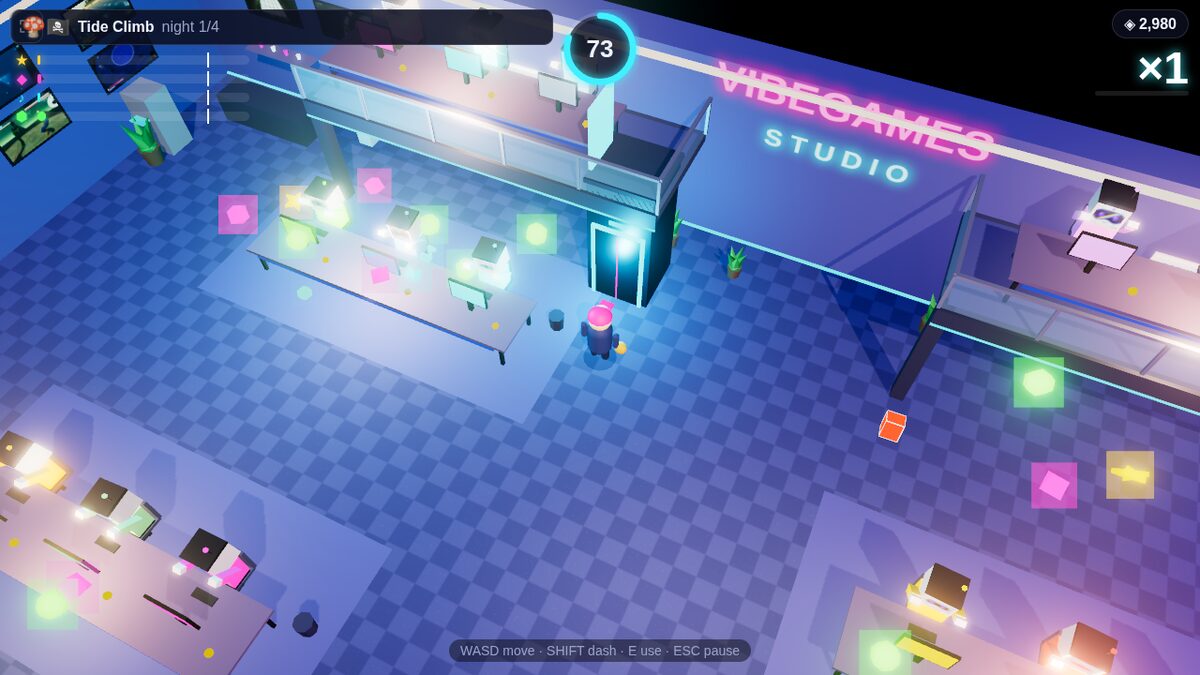
Swing Shift had a confession to make: its "cinematic intro" was three pages of text. It now has a real one, and the good part is how. Rather than film a cutscene, the game boots a throwaway demolition contract with no HUD and no scoring, hands the camera to a director, and shoots the opening inside its own live physics world — up the mast, ball winched into frame, and a four-storey brick shell of 250 rigid bodies genuinely coming down on camera. Wins, failures and the campaign ending now play out over the rubble you personally made. Heavy hits also freeze time for a tenth of a second, which turns out to be the whole difference between hitting a building and hitting a building.
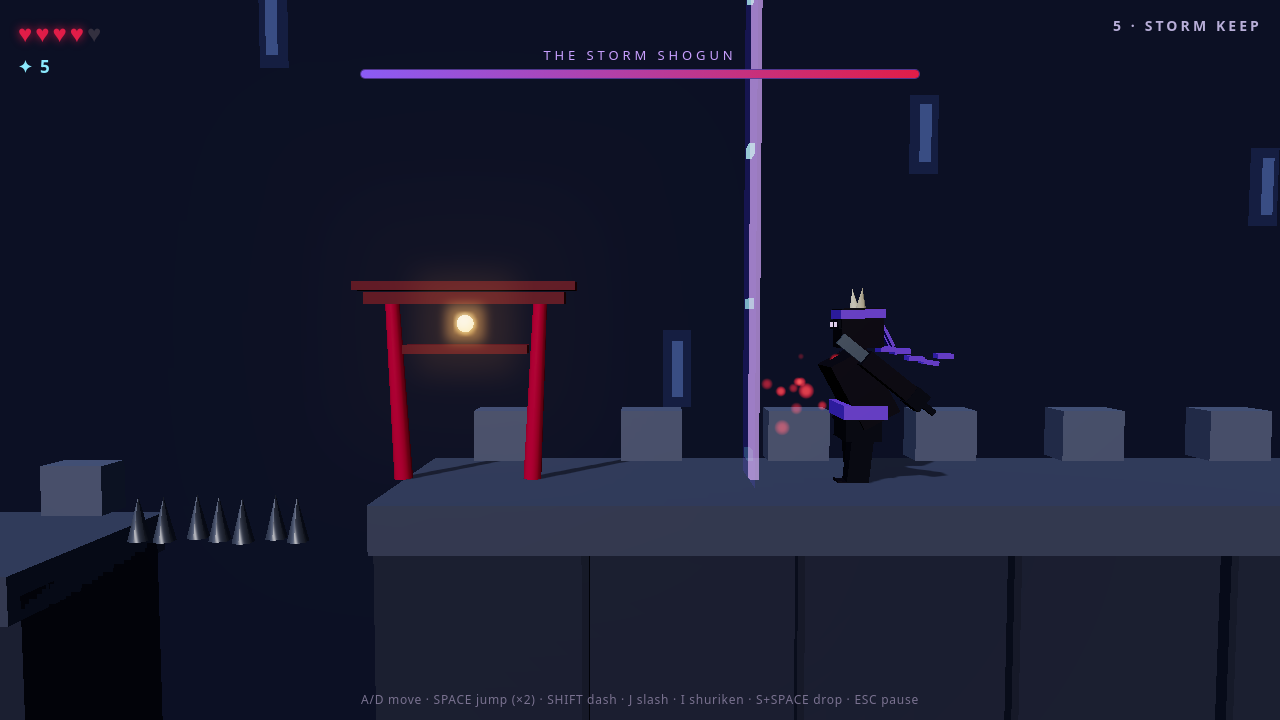
And Run Shinobi Run got a bug fixed that we are not proud of having shipped. Dying to the Storm Shogun dropped you outside his arena — which had sealed itself behind an invisible wall you could not climb, with the boss still alive on the other side. Maximum reachable position: 179.64. Wall: 180. The only escape was a menu option nothing told you about. Now dying to him respawns you inside the arena with the fight properly reset, and the walls you can't cross are visible glowing wards instead of a rumour.
Three lanes, three passes, one policy gate that fired exactly when it was supposed to. Two things we still can't verify: Cape Fatigue's win sequence exists in code but no machine here has survived long enough to see it, and Swing Shift's ending film has never once played on a speaker anyone owns. Human volunteers welcome.